Antibiotics 101: Why are they not working?!
Have you ever had leftover pills from an antibiotic prescription? Have you taken those leftover pills or given them to someone else when they felt sick “just in case”? Have you ever missed a dose and decided to just double the next dose? Have you ever stopped taking the antibiotics prescribed to you after three or four days because you felt better? Or better yet, have you taken someone else’s antibiotics or purchased them illegally?
Chances are you have had an infection or two (or many) in your lifetime. Chances are you have had to take antibiotics for one or all of those infections. Chances are you will have an infection that will need to be treated by antibiotics at some point in the future.
The question is – what are the chances that there will be an antibiotic to treat it?
Thanks to the new and improved, and ever-mutating superbugs, there may not be. Antibiotic resistance is on the rise and you and I are probably to blame for it!
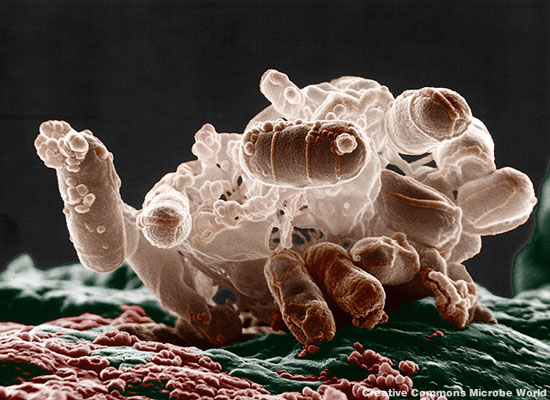 |
| http://www.huffingtonpost.com/stephen-wells/superbug-health-crisis-de_b_3839724.html |
My name is Itza Vargas and I am a student at Alverno College. I am currently enrolled in Microbiology class and I have been assigned the wonderful topic of antibiotic resistance. You've heard of the topic before. You've possibly even talked about it with your coworkers, classmates, or friends. It's a topic that is even being discussed in Twitter and at The White House.
The White @WhiteHouse is trying to figure out what to do about rising antibiotic resistance in microbes. http://t.co/B9WiRC62Xy
— Laurie Garrett (@Laurie_Garrett) April 4, 2014
The Crisis Of Antibiotic Resistance: The Germs Are Winning http://t.co/1JMxeJ4ZBL
— WGBH News (@wgbhnews) April 3, 2014
Have you ever had leftover pills from an antibiotic prescription? Have you taken those leftover pills or given them to someone else when they felt sick “just in case”? Have you ever missed a dose and decided to just double the next dose? Have you ever stopped taking the antibiotics prescribed to you after three or four days because you felt better? Or better yet, have you taken someone else’s antibiotics or purchased them illegally?
If
you answered “yes” to at least one of those questions – you are one of the
millions of contributors to the rapid rise of antibiotic resistance.
And,
yes, I did ask if you ever purchased them illegally because…it happens.
So why is this a problem? According to the World Health Organization "Infectious diseases were the primary cause of mortality in mankind prior to the discovery and use of antimicrobials. In much of the developing world without access to good quality medicines, infections continue to be the major killers, and in all countries healthcare-associated infections with resistant microorganisms are a major cause of death" (WHO, 2014).
Because of the use, overuse, and misuse of antibiotics, bacterial infections that once were treated and easily cured have become difficult to treat. Bacteria that at one time could have been killed, have mutated and become resistant to antibiotics.
Our actions are making these bacteria stronger! How are we responsible for antibiotic resistance? By using antibiotics when they are not needed, by not taking them as prescribed, and by overusing them in animals (in vet medicine and agriculture).
Ever wonder how that chicken got so plump? An article by PBS Frontline stated that antibiotics are fed to the animals by farmers when it was discovered that small daily doses of antibiotics "would make most animals gain as much as 3 percent more weight than they otherwise would" (PBS, 2014).
howstuffworks.com explains in an easy, clear way how antibiotics work against bacteria:
*They cripple production of the bacterial cell wall.
*They interfere with protein synthesis.
*They destroy/damage metabolic processes that bacteria need.
*They block the synthesis of DNA and mRNA.
...and how bacteria counteract:
*They prevent the antibiotic from getting to its target.
*They change the target.
*They destroy the antibiotic.
CNN Health (2014) shared the following information from the CDC:
"According to the CDC, the following bacteria are the most "Urgent Threats":
CRE bacteria -- a family of germs called carbapenem-resistant Enterobacteriaceae, which includes E. Coli. Some CRE bacteria are resistant to all existing antibiotics. The CDC reports more than 9,000 infections are contracted in hospitals and other health care settings from these bacteria. As many as 50% of the patients who are infected with CRE end up dying because there is nothing to help them fight the infections.
Clostridium Difficile (C-Diff for short) -- a bacteria that can cause life-threatening diarrhea. It kills up to 14,000 people and causes a quarter million hospitalizations each year. Most patients who get this potentially deadly infection are on antibiotics for other infections. The problem is that while antibiotics kill bad bugs, they also kill good bacteria in your gastrointestinal system that help fight off bad bacteria, C-Diff included.
Neisseria gonorrhoeae -- the drug-resistant form of this bacteria causes gonorrhea, the second most commonly reported infection in the United States. Gonorrhea can cause a variety of illnesses in men and women, including infertility. The CDC estimates there are 820,000 infections each year. In nearly a third of the cases, treatment of the sexually-transmitted disease, is hampered by growing antibiotic resistance."
Antibiotic resistance is a serious problem worldwide. "More than 2 million people get antibiotic-resistant infections each year, and at least 23,000 die because current drugs no longer stop their infections" (CNN, 2014).
And because I am not a scientist or microbiologist, nor do I play one on TV, here is a better explanation of how antibiotic resistance occurs:
 |
| http://myscientificways.wordpress.com/tag/antibiotic-resistance/ |
Because of the use, overuse, and misuse of antibiotics, bacterial infections that once were treated and easily cured have become difficult to treat. Bacteria that at one time could have been killed, have mutated and become resistant to antibiotics.
 |
| http://paleohacks.com/questions/218299/is-tyson-natural-chicken-really-healthy.html |
Ever wonder how that chicken got so plump? An article by PBS Frontline stated that antibiotics are fed to the animals by farmers when it was discovered that small daily doses of antibiotics "would make most animals gain as much as 3 percent more weight than they otherwise would" (PBS, 2014).
howstuffworks.com explains in an easy, clear way how antibiotics work against bacteria:
*They cripple production of the bacterial cell wall.
*They interfere with protein synthesis.
*They destroy/damage metabolic processes that bacteria need.
*They block the synthesis of DNA and mRNA.
...and how bacteria counteract:
*They prevent the antibiotic from getting to its target.
*They change the target.
*They destroy the antibiotic.
CNN Health (2014) shared the following information from the CDC:
"According to the CDC, the following bacteria are the most "Urgent Threats":
CRE bacteria -- a family of germs called carbapenem-resistant Enterobacteriaceae, which includes E. Coli. Some CRE bacteria are resistant to all existing antibiotics. The CDC reports more than 9,000 infections are contracted in hospitals and other health care settings from these bacteria. As many as 50% of the patients who are infected with CRE end up dying because there is nothing to help them fight the infections.
Clostridium Difficile (C-Diff for short) -- a bacteria that can cause life-threatening diarrhea. It kills up to 14,000 people and causes a quarter million hospitalizations each year. Most patients who get this potentially deadly infection are on antibiotics for other infections. The problem is that while antibiotics kill bad bugs, they also kill good bacteria in your gastrointestinal system that help fight off bad bacteria, C-Diff included.
Neisseria gonorrhoeae -- the drug-resistant form of this bacteria causes gonorrhea, the second most commonly reported infection in the United States. Gonorrhea can cause a variety of illnesses in men and women, including infertility. The CDC estimates there are 820,000 infections each year. In nearly a third of the cases, treatment of the sexually-transmitted disease, is hampered by growing antibiotic resistance."
Antibiotic resistance is a serious problem worldwide. "More than 2 million people get antibiotic-resistant infections each year, and at least 23,000 die because current drugs no longer stop their infections" (CNN, 2014).
A timeline of antibiotic resistance pic.twitter.com/i0BFqiifIW via @transparency_a1
— Sarah Reynolds (@Sarah__Reynolds) March 31, 2014
After reading all of this, you might be asking yourself: What can I do to prevent antibiotic resistance?
It's pretty simple:
It's pretty simple:
- Understand that you don't need antibiotics for the flu or for colds because they are caused by viruses, NOT bacteria.
- Take your antibiotics as prescribed; follow the doctors instructions - right quantity for the right amount of time.
- Do not take somebody else's medications nor should you share yours.
- Avoid and prevent infections from spreading. HAND WASHING is one of the easiest and most common ways to do so!
 |
| http://www.familyhealthonline.ca/fho/childhood/CH_influenza_FHa08.asp |
And because I am not a scientist or microbiologist, nor do I play one on TV, here is a better explanation of how antibiotic resistance occurs:
References
Drug resistance.
(2014). Retrieved April 5, 2014, from World Health Organization
website: http://www.who.int/drugresistance/AMR_Importance/en/
Falco, M. (2013,
September 17). CDC sets threat levels for drug-resistant 'superbugs'.
Retrieved April 5, 2014, from CNN Health
website:
http://www.cnn.com/2013/09/16/health/antibiotic-resistant-infections-cdc/
Frontline modern meat.
(2014). Retrieved April 5, 2014, from PBS website:
http://www.pbs.org/wgbh/pages/frontline/shows/meat/safe/overview.html
How do bacteria become
resistant to antibiotics? (2001, January 30). Retrieved April
5, 2014, from How Stuff Works website:
http://science.howstuffworks.com/environmental/life/cellular-
microscopic/question561.htm
Walker, D. (2013, June
2). South side grocery store suspected of fencing operation.
Retrieved April 5, 2014, from Milwaukee
Journal Sentinel website:
http://www.jsonline.com/news/milwaukee/south-side-grocery-store-suspected-of-
fencing-operation-b9924210z1-209864961.html

